Ravens Don't Follow Wolves, They Predict Their Patterns
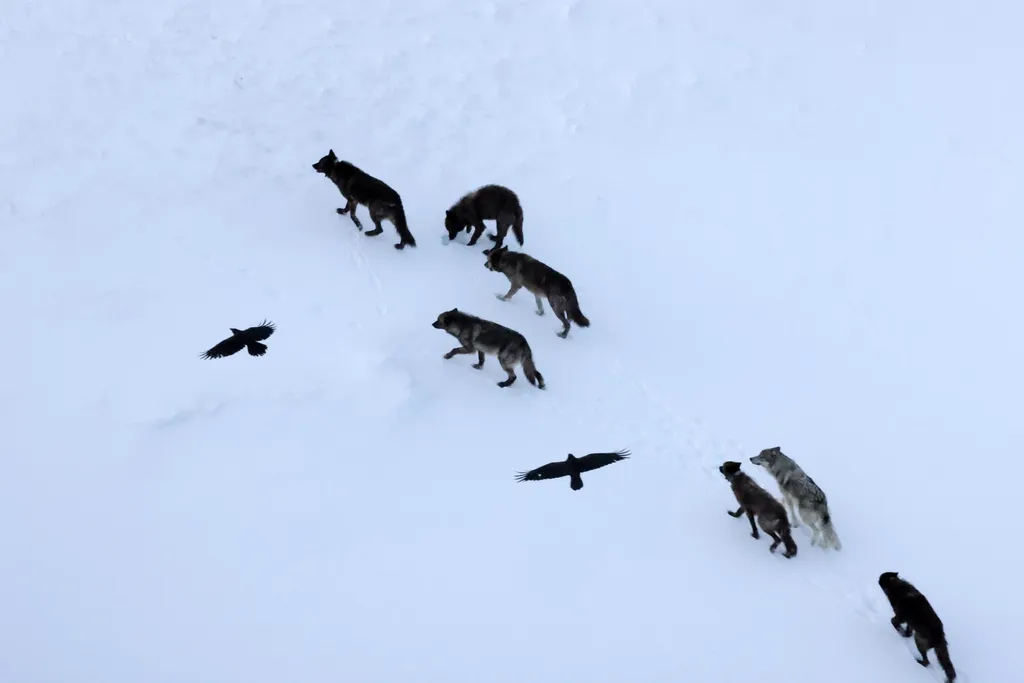
A new study reveals that ravens in Yellowstone National Park do not follow wolves but instead use memory to locate their kills. Researchers found that ravens remember areas where wolves frequently make kills and can fly directly to these sites. This challenges the previous assumption that ravens simply shadow wolves for food.
- ▪Ravens rely on spatial memory to find wolf kills rather than following them over long distances.
- ▪The study tracked ravens and wolves in Yellowstone for over two years using GPS devices.
- ▪Researchers discovered that ravens can fly six hours non-stop to reach a kill site they remember.
Hacker News (Newest) files mainly under programming. We currently carry 5,306 of its stories.
Story provenance
Source · retrieval · rights · ranking — open for full record
inspect →
Story provenance
Attribution is not the same as permission. This drawer separates discovery metadata, excerpts, WeSearch-generated summaries, reuse status, and whether the publisher receives the visit. Nothing here claims a legal grant the publisher has not made.
Record
| Original publisher | SciTechDaily |
| Canonical URL | https://scitechdaily.com/ravens-dont-follow-wolves-they-predict-them/ |
| Publication time | Mon, 25 May 2026 01:49:37 +0000 |
| Retrieval time | 2026-05-25T02:07:35.197Z |
| Last seen | 2026-05-25T02:07:35.197Z |
| Headline source | Publisher (no WeSearch rewrite) |
| Excerpt source | publisher body |
| Excerpt method | First ~120 words (~800 chars) of extracted publisher body, fair-use limited. |
| Summary | WeSearch · cerebras-chat (WeSearch summarizer) |
| Summary source text | contentText |
| Citation coverage | Summary is a WeSearch-generated derivative; primary citation is the original publisher URL. |
| Cluster | oiu15xFgPRV- |
| Cluster logic | Grouped by semantic title/content similarity across sources within a rolling window. Same-publisher template collisions are excluded from coverage comparison. |
| Ranking reason | Story pages are not engagement-ranked. Hub feeds use recency, with optional source-diversified chronological ordering (cap consecutive stories per source). No personalized ranking. |
| Publisher visit | Yes — open original |
| Substitutes article? | No — link-out required for full text |
Rights status (four layers)
WeSearch handling by dimension
| Indexing | May the item be indexed (stored, ranked, made findable)? | Allowed |
| Snippet | May a short excerpt of the publisher's text be shown? | Allowed |
| AI summary | May WeSearch generate its own short summary of the article? | Limited |
| Retrieval / RAG | May the content be exposed for third-party retrieval-augmented generation? | Not asserted |
| Model training | May the content be used to train AI models? | Not asserted |
| Commercial reuse | May the content be reused commercially? | Not permitted |
Basis: Derived from the published RSS/Atom feed. Contact: [email protected]. Reviewed: 2026-07-24.
Opening excerpt (first ~120 words) tap to expand
Share Facebook Twitter LinkedIn Pinterest Telegram Email Reddit Two ravens soar above a wolf pack in Yellowstone. This type of short-distance following is common, but prolonged following is extremely rare. Credit: Daniel Stahler / YNPWhen wolves bring down prey in Yellowstone National Park, ravens often appear almost immediately. Long before the predators finish feeding, the birds gather nearby to grab scraps of meat. Their ability to locate fresh kills so quickly has puzzled observers for years, leading many people to assume that ravens simply follow wolves across the landscape.Ravens Use Memory To Find Wolf KillsA new study suggests the real explanation is far more impressive.
…
Excerpt limited to ~120 words for fair-use compliance. The full article is at SciTechDaily.
Discussion
0 commentsMore from SciTechDaily