Reflections on an Angelheaded Hipster: Celebrating Allen Ginsberg’s 100th Birthday
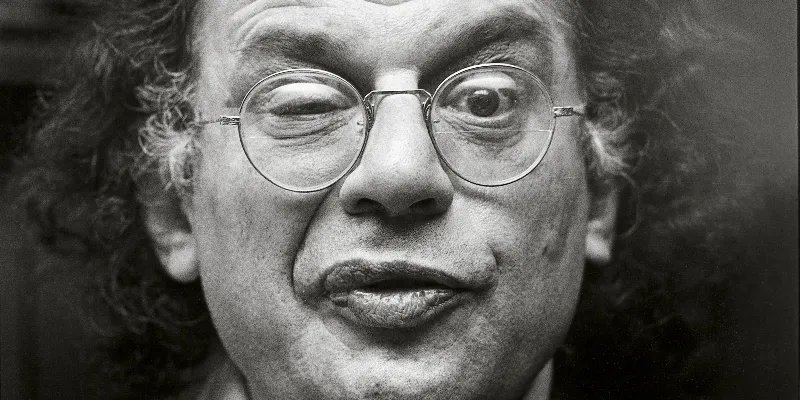
Allen Ginsberg, born a century ago, is celebrated as a pivotal figure in 20th-century American poetry. His work, particularly 'Howl', marked a significant moment in the Beat Generation, influencing countless writers and artists. Ginsberg's legacy endures as he remains a symbol of artistic rebellion and social critique.
- ▪Ginsberg first read 'Howl' at San Francisco's Six Gallery in 1955.
- ▪He is often regarded as the most enduring figure among the Beat poets.
- ▪Ginsberg's poetry continues to resonate with themes of social justice and personal authenticity.
Literary Hub (LitHub) files mainly under books. We currently carry 79 of its stories.
Story provenance
Source · retrieval · rights · ranking — open for full record
inspect →
Story provenance
Attribution is not the same as permission. This drawer separates discovery metadata, excerpts, WeSearch-generated summaries, reuse status, and whether the publisher receives the visit. Nothing here claims a legal grant the publisher has not made.
Record
| Original publisher | Literary Hub |
| Canonical URL | https://lithub.com/reflections-on-an-angelheaded-hipster-celebrating-allen-ginsbergs-100th-birthday/ |
| Publication time | Wed, 03 Jun 2026 08:59:29 +0000 |
| Retrieval time | 2026-06-03T09:12:00.412Z |
| Last seen | 2026-06-03T09:12:00.412Z |
| Headline source | Publisher (no WeSearch rewrite) |
| Excerpt source | publisher body |
| Excerpt method | First ~120 words (~800 chars) of extracted publisher body, fair-use limited. |
| Summary | WeSearch · cerebras-chat (WeSearch summarizer) |
| Summary source text | contentText |
| Citation coverage | Summary is a WeSearch-generated derivative; primary citation is the original publisher URL. |
| Cluster | _zjl9zoQJWJK |
| Cluster logic | Grouped by semantic title/content similarity across sources within a rolling window. Same-publisher template collisions are excluded from coverage comparison. |
| Ranking reason | Story pages are not engagement-ranked. Hub feeds use recency, with optional source-diversified chronological ordering (cap consecutive stories per source). No personalized ranking. |
| Publisher visit | Yes — open original |
| Substitutes article? | No — link-out required for full text |
Rights status (four layers)
WeSearch handling by dimension
| Indexing | May the item be indexed (stored, ranked, made findable)? | Allowed |
| Snippet | May a short excerpt of the publisher's text be shown? | Allowed |
| AI summary | May WeSearch generate its own short summary of the article? | Limited |
| Retrieval / RAG | May the content be exposed for third-party retrieval-augmented generation? | Not asserted |
| Model training | May the content be used to train AI models? | Not asserted |
| Commercial reuse | May the content be reused commercially? | Not permitted |
Basis: Derived from the published RSS/Atom feed. Contact: [email protected]. Reviewed: 2026-07-24.
Opening excerpt (first ~120 words) tap to expand
Allen Ginsberg was born in Newark a century ago today. He is totem as much as poet, arguably the most famous American writer of verse in the twentieth-century. There’s the Ginsberg dancing like a shaman in an alleyway behind Bob Dylan in the proto-music video for “Subterranean Homesick Blues,” the Ginsberg chanting alongside John and Yoko on “Give Peace a Chance,” the Ginsberg played by James Franco and Daniel Radcliffe. In the public imagination he was the embodiment of “poet” in the second half of the twentieth-century, an example of “bohemianism at its best” as Jonah Raskin writes in American Scream: Allen Ginsberg’s Howl and the Making of the Beat Generation.Article continues after advertisement(new Image()).src =…
Excerpt limited to ~120 words for fair-use compliance. The full article is at Literary Hub.
Discussion
0 commentsMore from Literary Hub