Stanford scientists just built a room-temperature quantum device
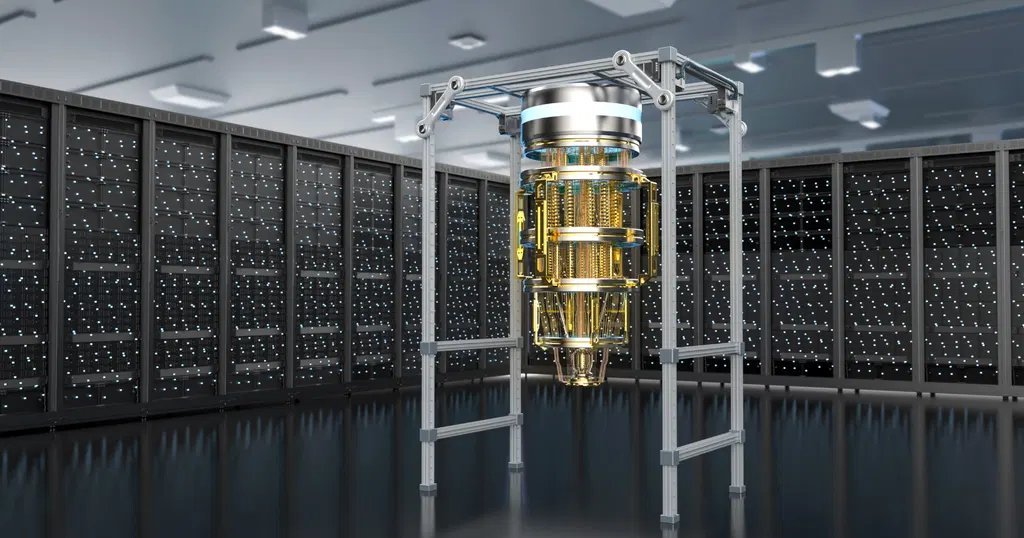
Stanford scientists have developed a room-temperature quantum device that utilizes twisted light to connect electrons and photons. This breakthrough could make quantum computing more accessible by eliminating the need for extreme cooling systems. The device represents a significant step towards practical quantum hardware that can be used outside specialized facilities.
- ▪The new device performs quantum communication operations at room temperature without the need for cryogenic systems.
- ▪It entangles the spin of photons and electrons, which is essential for quantum cryptography and computing.
- ▪The technology uses twisted light to enhance the stability of quantum states at higher temperatures.
Hacker News (Newest) files mainly under programming. We currently carry 5,306 of its stories.
Story provenance
Source · retrieval · rights · ranking — open for full record
inspect →
Story provenance
Attribution is not the same as permission. This drawer separates discovery metadata, excerpts, WeSearch-generated summaries, reuse status, and whether the publisher receives the visit. Nothing here claims a legal grant the publisher has not made.
Record
| Original publisher | Make Tech Easier |
| Canonical URL | https://maketecheasier.com/stanford-scientists-just-built-a-room-temperature-quantum-device-that-uses-twisted-light-to-connect-electrons-and-photons-an-long-sought-breakthrough-that-could-finally-take-quantum-comp/ |
| Publication time | Sat, 30 May 2026 07:30:14 +0000 |
| Retrieval time | 2026-05-30T07:42:08.445Z |
| Last seen | 2026-05-30T07:42:08.445Z |
| Headline source | Publisher (no WeSearch rewrite) |
| Excerpt source | publisher body |
| Excerpt method | First ~120 words (~800 chars) of extracted publisher body, fair-use limited. |
| Summary | WeSearch · cerebras-chat (WeSearch summarizer) |
| Summary source text | contentText |
| Citation coverage | Summary is a WeSearch-generated derivative; primary citation is the original publisher URL. |
| Cluster | jzoo1uq5s0NK |
| Cluster logic | Grouped by semantic title/content similarity across sources within a rolling window. Same-publisher template collisions are excluded from coverage comparison. |
| Ranking reason | Story pages are not engagement-ranked. Hub feeds use recency, with optional source-diversified chronological ordering (cap consecutive stories per source). No personalized ranking. |
| Publisher visit | Yes — open original |
| Substitutes article? | No — link-out required for full text |
Rights status (four layers)
WeSearch handling by dimension
| Indexing | May the item be indexed (stored, ranked, made findable)? | Allowed |
| Snippet | May a short excerpt of the publisher's text be shown? | Allowed |
| AI summary | May WeSearch generate its own short summary of the article? | Limited |
| Retrieval / RAG | May the content be exposed for third-party retrieval-augmented generation? | Not asserted |
| Model training | May the content be used to train AI models? | Not asserted |
| Commercial reuse | May the content be reused commercially? | Not permitted |
Basis: Derived from the published RSS/Atom feed. Contact: [email protected]. Reviewed: 2026-07-24.
Opening excerpt (first ~120 words) tap to expand
Home > Computing Stanford scientists just built a room-temperature quantum device that uses “twisted light” to connect electrons and photons — an long-sought breakthrough that could finally take quantum computing out of extreme sub-zero labs and into everyday devices By Make Tech Easier Editorial Team May 30, 2026 Add as a preferred source on Google Must ReadIn 1985, registering a .com domain cost nothing, required a technical request rather than a shopping cart, and produced only six names in twelve months, before the millionth .com arrived in 1997 and the 100 million mark in 2012In 1977, NASA launched Voyager 1 carrying a map that uses 14 pulsars to pinpoint Earth’s exact position in the Milky Way—a cosmic roadmap designed for curious aliens that some modern astrophysicists, including…
Excerpt limited to ~120 words for fair-use compliance. The full article is at Make Tech Easier.
Discussion
0 commentsMore from Make Tech Easier