20,000 Eyes on the Universe
The MUltiplexed Survey Telescope (MUST) is set to revolutionize our understanding of the universe by measuring the redshifts of over 100 million galaxies and quasars. With its advanced technology, including 20,000 robotic fibre positioners, MUST will be ten times more efficient than current instruments. This ambitious project aims to address fundamental questions in physics and cosmology starting in the early 2030s.
- ▪MUST will measure the redshifts of over 100 million galaxies and quasars.
- ▪The telescope features 20,000 robotic fibre positioners, significantly enhancing survey efficiency.
- ▪It aims to build the most detailed three-dimensional map of the universe ever assembled.
2 outlets in our directory ran this story, first to last over 1 hour. All of the coverage we found sits in one bucket: centre. That one-sidedness is itself worth noticing.
- ▪ 20,000 eyes on the universe — Phys.org
Hacker News (Newest) files mainly under programming. We currently carry 5,306 of its stories.
Story provenance
Source · retrieval · rights · ranking — open for full record
inspect →
Story provenance
Attribution is not the same as permission. This drawer separates discovery metadata, excerpts, WeSearch-generated summaries, reuse status, and whether the publisher receives the visit. Nothing here claims a legal grant the publisher has not made.
Record
| Original publisher | Universe Today |
| Canonical URL | https://www.universetoday.com/articles/20000-eyes-on-the-universe |
| Publication time | Fri, 29 May 2026 14:10:53 +0000 |
| Retrieval time | 2026-05-29T14:20:01.346Z |
| Last seen | 2026-05-29T14:20:01.346Z |
| Headline source | Publisher (no WeSearch rewrite) |
| Excerpt source | publisher body |
| Excerpt method | First ~120 words (~800 chars) of extracted publisher body, fair-use limited. |
| Summary | WeSearch · cerebras-chat (WeSearch summarizer) |
| Summary source text | contentText |
| Citation coverage | Summary is a WeSearch-generated derivative; primary citation is the original publisher URL. |
| Cluster | 9OgpXl3B6002 · 2 stories |
| Cluster logic | Grouped by semantic title/content similarity across sources within a rolling window. Same-publisher template collisions are excluded from coverage comparison. |
| Ranking reason | Story pages are not engagement-ranked. Hub feeds use recency, with optional source-diversified chronological ordering (cap consecutive stories per source). No personalized ranking. |
| Publisher visit | Yes — open original |
| Substitutes article? | No — link-out required for full text |
Rights status (four layers)
WeSearch handling by dimension
| Indexing | May the item be indexed (stored, ranked, made findable)? | Allowed |
| Snippet | May a short excerpt of the publisher's text be shown? | Allowed |
| AI summary | May WeSearch generate its own short summary of the article? | Limited |
| Retrieval / RAG | May the content be exposed for third-party retrieval-augmented generation? | Not asserted |
| Model training | May the content be used to train AI models? | Not asserted |
| Commercial reuse | May the content be reused commercially? | Not permitted |
Basis: Derived from the published RSS/Atom feed. Contact: [email protected]. Reviewed: 2026-07-24.
Opening excerpt (first ~120 words) tap to expand
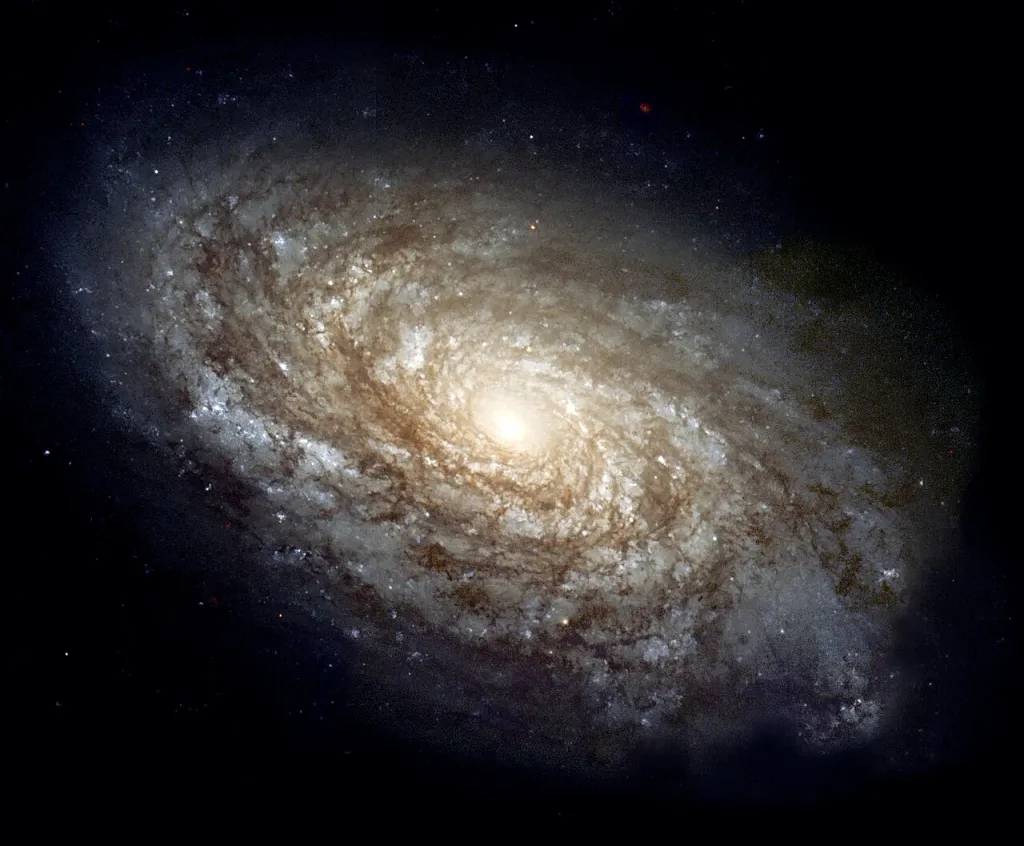
20,000 Eyes on the Universe By Mark Thompson - May 29, 2026 09:27 AM UTC | Telescopes Capturing images of galaxies, like this image of In 1995, NGC 4414 doesn't tell us much about the nature of the galaxy (Credit : The Hubble Heritage Team) Think about a census. You could photograph every house in the country and produce a beautiful map, but without knocking on doors and asking questions, you'd know almost nothing about the people living in them. Astronomy finds itself in exactly this situation. Surveys like Euclid and the Vera Rubin Observatory will soon catalogue over 30 billion galaxies, an almost incomprehensible number.
…
Excerpt limited to ~120 words for fair-use compliance. The full article is at Universe Today.
Discussion
0 commentsMore from Universe Today