A Brief-Ish History of SETI. Part VII: Brief Windows and Transcendence
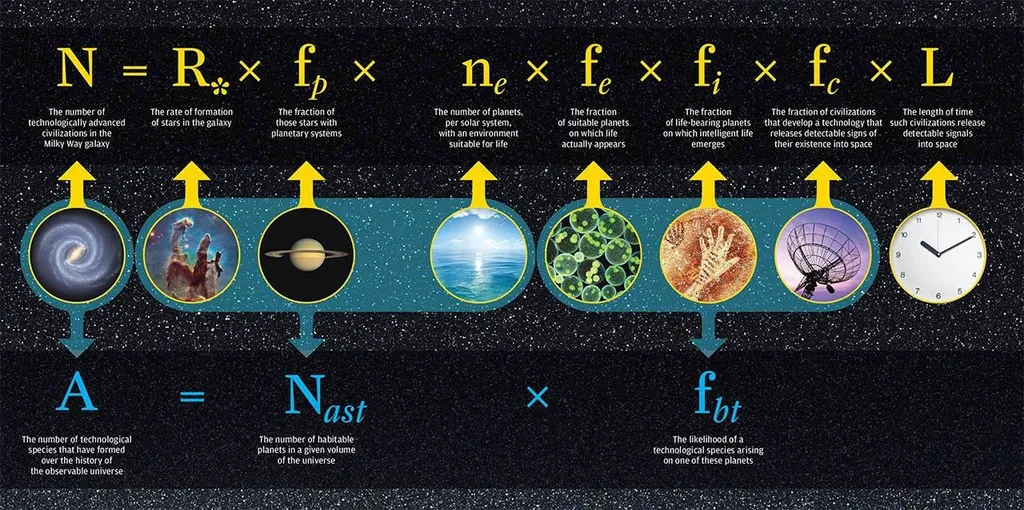
The article discusses the ongoing exploration of the Search for Extraterrestrial Intelligence (SETI) and examines various hypotheses regarding the absence of contact with advanced civilizations. It highlights the 'Brief Window Hypothesis,' which suggests that the lifespan of technologically advanced civilizations may be too short for meaningful communication. Additionally, it explores the idea that exponential growth may not be sustainable for intelligent civilizations, drawing parallels with human history.
- ▪The Drake Equation estimates the probability of finding advanced civilizations in the Universe.
- ▪The 'Brief Window Hypothesis' suggests that the lifespan of a civilization is finite, impacting their ability to communicate.
- ▪Some researchers argue that exponential growth is not sustainable for intelligent civilizations, which may explain the lack of contact.
Hacker News (Newest) files mainly under programming. We currently carry 5,306 of its stories.
Story provenance
Source · retrieval · rights · ranking — open for full record
inspect →
Story provenance
Attribution is not the same as permission. This drawer separates discovery metadata, excerpts, WeSearch-generated summaries, reuse status, and whether the publisher receives the visit. Nothing here claims a legal grant the publisher has not made.
Record
| Original publisher | Universe Today |
| Canonical URL | https://www.universetoday.com/articles/a-brief-ish-history-of-seti-part-vii-brief-windows-and-transcendence |
| Publication time | Mon, 25 May 2026 20:12:49 +0000 |
| Retrieval time | 2026-05-25T20:37:40.523Z |
| Last seen | 2026-05-25T20:37:40.523Z |
| Headline source | Publisher (no WeSearch rewrite) |
| Excerpt source | publisher body |
| Excerpt method | First ~120 words (~800 chars) of extracted publisher body, fair-use limited. |
| Summary | WeSearch · cerebras-chat (WeSearch summarizer) |
| Summary source text | contentText |
| Citation coverage | Summary is a WeSearch-generated derivative; primary citation is the original publisher URL. |
| Cluster | VwI0SevlLJVQ |
| Cluster logic | Grouped by semantic title/content similarity across sources within a rolling window. Same-publisher template collisions are excluded from coverage comparison. |
| Ranking reason | Story pages are not engagement-ranked. Hub feeds use recency, with optional source-diversified chronological ordering (cap consecutive stories per source). No personalized ranking. |
| Publisher visit | Yes — open original |
| Substitutes article? | No — link-out required for full text |
Rights status (four layers)
WeSearch handling by dimension
| Indexing | May the item be indexed (stored, ranked, made findable)? | Allowed |
| Snippet | May a short excerpt of the publisher's text be shown? | Allowed |
| AI summary | May WeSearch generate its own short summary of the article? | Limited |
| Retrieval / RAG | May the content be exposed for third-party retrieval-augmented generation? | Not asserted |
| Model training | May the content be used to train AI models? | Not asserted |
| Commercial reuse | May the content be reused commercially? | Not permitted |
Basis: Derived from the published RSS/Atom feed. Contact: [email protected]. Reviewed: 2026-07-24.
Opening excerpt (first ~120 words) tap to expand
A Brief-ish History of SETI. Part VII: Brief Windows and Transcendence By Matthew Williams - May 24, 2026 11:27 PM UTC | Space Exploration The Drake Equation: a mathematical formula for estimating the probability of finding advanced civilizations in the Universe. Credit: University of Rochester Welcome back to our continuing series on the Brief-ish History of SETI. In our previous installments, we looked at the early history and the first experiments in the Search for Extraterrestrial Intelligence (SETI), followed by the first example of a modern SETI survey (Project Ozma) led by famed Cornell professor Frank Drake, the Drake Equation, and the enduring legacy of both.
…
Excerpt limited to ~120 words for fair-use compliance. The full article is at Universe Today.
Discussion
0 commentsMore from Universe Today