How Bees Came to the United States and Changed Our Landscape
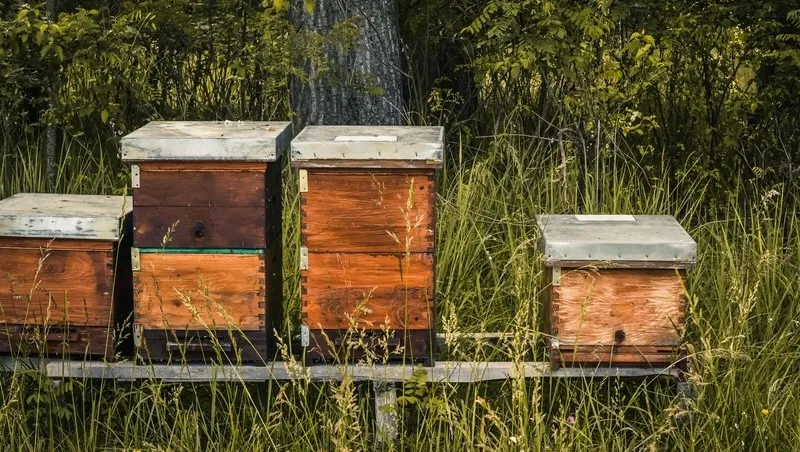
Honey bees have significantly influenced US agriculture over the past 150 years. Originally brought by colonists, they have evolved from a backyard hobby to a vital component of farming, aiding in the pollination of crops. The introduction of the Langstroth hive in 1851 revolutionized beekeeping, allowing for better management and health monitoring of bee colonies.
- ▪Honey bees were first brought to the United States in 1622 by colonists.
- ▪They became essential for pollinating crops like apple and cherry trees.
- ▪The Langstroth hive, invented in 1851, transformed beekeeping practices by allowing easier inspection and honey harvesting.
Literary Hub (LitHub) files mainly under books. We currently carry 79 of its stories.
Story provenance
Source · retrieval · rights · ranking — open for full record
inspect →
Story provenance
Attribution is not the same as permission. This drawer separates discovery metadata, excerpts, WeSearch-generated summaries, reuse status, and whether the publisher receives the visit. Nothing here claims a legal grant the publisher has not made.
Record
| Original publisher | Literary Hub |
| Canonical URL | https://lithub.com/how-bees-came-to-the-united-states-and-changed-our-landscape/ |
| Publication time | Wed, 27 May 2026 08:59:05 +0000 |
| Retrieval time | 2026-05-27T09:07:56.948Z |
| Last seen | 2026-05-27T09:07:56.948Z |
| Headline source | Publisher (no WeSearch rewrite) |
| Excerpt source | publisher body |
| Excerpt method | First ~120 words (~800 chars) of extracted publisher body, fair-use limited. |
| Summary | WeSearch · cerebras-chat (WeSearch summarizer) |
| Summary source text | contentText |
| Citation coverage | Summary is a WeSearch-generated derivative; primary citation is the original publisher URL. |
| Cluster | JBWXpgwgca_G |
| Cluster logic | Grouped by semantic title/content similarity across sources within a rolling window. Same-publisher template collisions are excluded from coverage comparison. |
| Ranking reason | Story pages are not engagement-ranked. Hub feeds use recency, with optional source-diversified chronological ordering (cap consecutive stories per source). No personalized ranking. |
| Publisher visit | Yes — open original |
| Substitutes article? | No — link-out required for full text |
Rights status (four layers)
WeSearch handling by dimension
| Indexing | May the item be indexed (stored, ranked, made findable)? | Allowed |
| Snippet | May a short excerpt of the publisher's text be shown? | Allowed |
| AI summary | May WeSearch generate its own short summary of the article? | Limited |
| Retrieval / RAG | May the content be exposed for third-party retrieval-augmented generation? | Not asserted |
| Model training | May the content be used to train AI models? | Not asserted |
| Commercial reuse | May the content be reused commercially? | Not permitted |
Basis: Derived from the published RSS/Atom feed. Contact: [email protected]. Reviewed: 2026-07-24.
Opening excerpt (first ~120 words) tap to expand
Over the past 150 years, honey bees have become the cornerstone of US agriculture. Beekeepers now crisscross the country in semi-trucks to pollinate our crops, towing thousands of bee colonies from one blooming pasture to the next like cattle ranchers on wheels.Article continues after advertisement But it wasn’t always this way. Like the colonists who brought them, Western honey bees (Apis mellifera) aren’t native to the Americas. Over centuries, a series of migrations and innovations transformed beekeeping from a backyard hobby to a nationwide enterprise. Honey bees were domesticated to serve farms, and the fates of beekeepers and US agriculture became tightly intertwined. Humans have been hooked on honey for thousands of years.
…
Excerpt limited to ~120 words for fair-use compliance. The full article is at Literary Hub.
Discussion
0 commentsMore from Literary Hub