Looking Back at Lewis and Clark
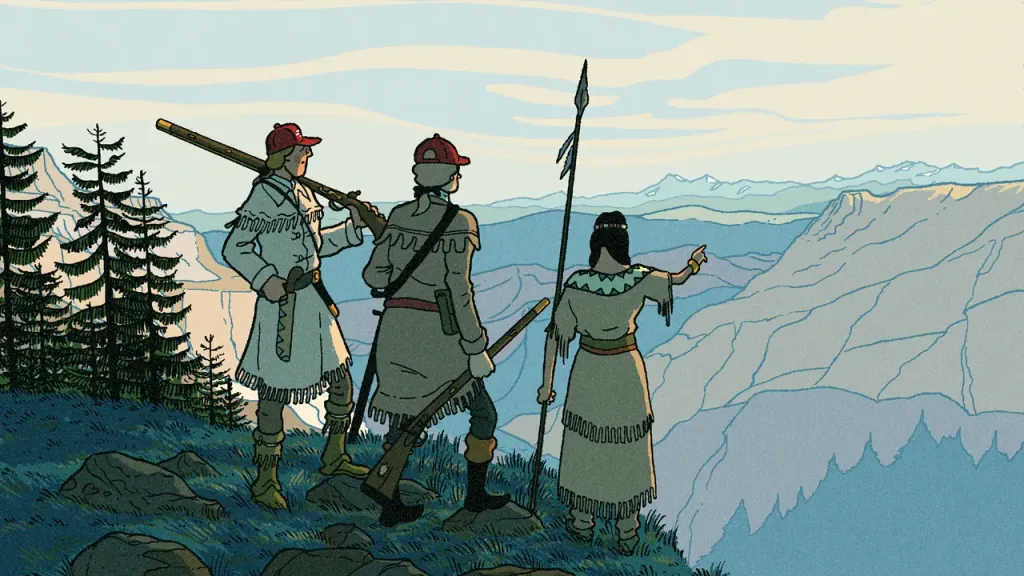
The article reflects on the historical significance of the Lewis and Clark expedition across the continent. It discusses the expedition's impact on American mythology and the skepticism surrounding its importance. The piece also highlights earlier explorations and the motivations behind Jefferson's decision to send Lewis and Clark on their journey.
- ▪The Lewis and Clark expedition is often romanticized in American history as a significant achievement.
- ▪Critics, like Henry Adams, have questioned the expedition's true value compared to other advancements in civilization.
- ▪Jefferson's decision to send Lewis and Clark was influenced by earlier explorations, including that of Scottish fur trader Alexander Mackenzie.
Hacker News (Newest) files mainly under programming. We currently carry 5,306 of its stories.
Story provenance
Source · retrieval · rights · ranking — open for full record
inspect →
Story provenance
Attribution is not the same as permission. This drawer separates discovery metadata, excerpts, WeSearch-generated summaries, reuse status, and whether the publisher receives the visit. Nothing here claims a legal grant the publisher has not made.
Record
| Original publisher | The New Yorker |
| Canonical URL | https://www.newyorker.com/magazine/2026/06/01/this-vast-enterprise-craig-fehrman-book-review |
| Publication time | Sat, 30 May 2026 20:08:12 +0000 |
| Retrieval time | 2026-05-30T20:29:45.642Z |
| Last seen | 2026-05-30T20:29:45.642Z |
| Headline source | Publisher (no WeSearch rewrite) |
| Excerpt source | publisher body |
| Excerpt method | First ~120 words (~800 chars) of extracted publisher body, fair-use limited. |
| Summary | WeSearch · cerebras-chat (WeSearch summarizer) |
| Summary source text | contentText |
| Citation coverage | Summary is a WeSearch-generated derivative; primary citation is the original publisher URL. |
| Cluster | uE_bQtojV1zD |
| Cluster logic | Grouped by semantic title/content similarity across sources within a rolling window. Same-publisher template collisions are excluded from coverage comparison. |
| Ranking reason | Story pages are not engagement-ranked. Hub feeds use recency, with optional source-diversified chronological ordering (cap consecutive stories per source). No personalized ranking. |
| Publisher visit | Yes — open original |
| Substitutes article? | No — link-out required for full text |
Rights status (four layers)
WeSearch handling by dimension
| Indexing | May the item be indexed (stored, ranked, made findable)? | Allowed |
| Snippet | May a short excerpt of the publisher's text be shown? | Allowed |
| AI summary | May WeSearch generate its own short summary of the article? | Limited |
| Retrieval / RAG | May the content be exposed for third-party retrieval-augmented generation? | Not asserted |
| Model training | May the content be used to train AI models? | Not asserted |
| Commercial reuse | May the content be reused commercially? | Not permitted |
Basis: Derived from the published RSS/Atom feed. Contact: [email protected]. Reviewed: 2026-07-24.
Opening excerpt (first ~120 words) tap to expand
BooksLooking Back at Lewis and ClarkThe explorers’ crossing of the continent is America’s most famous camping trip. What was it all for?By Caleb CrainMay 25, 2026In the national mythology, the expedition belongs to the morning of the story—back when the waterfalls hadn’t been choked by dams and there were still bands of Native Americans in the Rockies who had never seen a white person.Illustration by Ruby FressonSave this storySave this storySave this storySave this storyIf Meriwether Lewis and William Clark hadn’t gone up the Missouri River in 1804 and then down the lower Columbia River in 1805, there might today be less United States and more Canada. Lately, I have been having trouble imagining how that could be seen as a bad thing.Lewis and Clark have long had their skeptics.
…
Excerpt limited to ~120 words for fair-use compliance. The full article is at The New Yorker.
Discussion
0 commentsMore from The New Yorker