Manil Suri on Visualizing Your Book’s Narrative Structure
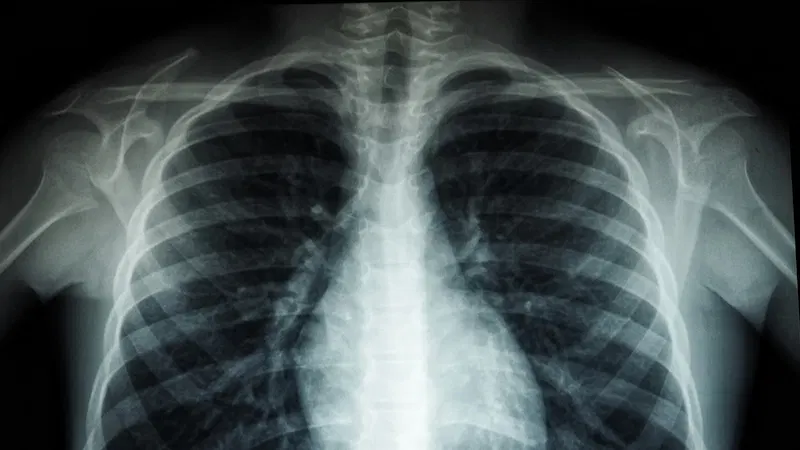
Manil Suri introduces a tool he created called a book x-ray, designed to help authors visualize the narrative structure of their works. This tool proved useful during the editing process of his memoir, revealing how different narrative strands interact. By color-coding and graphing these strands, Suri was able to address concerns from his editor about the book's connectivity and focus.
- ▪Manil Suri developed a tool called a book x-ray to visualize narrative structures in writing.
- ▪The tool helped him identify areas needing more connectivity in his memoir during the editing process.
- ▪Suri used color-coded graphs to represent different narrative strands, aiding in the rewriting process.
Literary Hub (LitHub) files mainly under books. We currently carry 79 of its stories.
Story provenance
Source · retrieval · rights · ranking — open for full record
inspect →
Story provenance
Attribution is not the same as permission. This drawer separates discovery metadata, excerpts, WeSearch-generated summaries, reuse status, and whether the publisher receives the visit. Nothing here claims a legal grant the publisher has not made.
Record
| Original publisher | Literary Hub |
| Canonical URL | https://lithub.com/manil-suri-on-visualizing-your-books-narrative-structure/ |
| Publication time | Fri, 22 May 2026 08:58:50 +0000 |
| Retrieval time | 2026-05-22T09:02:01.206Z |
| Last seen | 2026-05-22T09:02:01.206Z |
| Headline source | Publisher (no WeSearch rewrite) |
| Excerpt source | publisher body |
| Excerpt method | First ~120 words (~800 chars) of extracted publisher body, fair-use limited. |
| Summary | WeSearch · cerebras-chat (WeSearch summarizer) |
| Summary source text | contentText |
| Citation coverage | Summary is a WeSearch-generated derivative; primary citation is the original publisher URL. |
| Cluster | M5G6sfDqAvGU |
| Cluster logic | Grouped by semantic title/content similarity across sources within a rolling window. Same-publisher template collisions are excluded from coverage comparison. |
| Ranking reason | Story pages are not engagement-ranked. Hub feeds use recency, with optional source-diversified chronological ordering (cap consecutive stories per source). No personalized ranking. |
| Publisher visit | Yes — open original |
| Substitutes article? | No — link-out required for full text |
Rights status (four layers)
WeSearch handling by dimension
| Indexing | May the item be indexed (stored, ranked, made findable)? | Allowed |
| Snippet | May a short excerpt of the publisher's text be shown? | Allowed |
| AI summary | May WeSearch generate its own short summary of the article? | Limited |
| Retrieval / RAG | May the content be exposed for third-party retrieval-augmented generation? | Not asserted |
| Model training | May the content be used to train AI models? | Not asserted |
| Commercial reuse | May the content be reused commercially? | Not permitted |
Basis: Derived from the published RSS/Atom feed. Contact: [email protected]. Reviewed: 2026-07-24.
Opening excerpt (first ~120 words) tap to expand
This first appeared in Lit Hub’s Craft of Writing newsletter—sign up here. Here’s a nifty tool I’ve devised which authors might want to try out for themselves. It’s free, easy to use, and reveals the underlying narrative structure of a book, much like a medical diagnostic. I call it a book x-ray. I realized the need for it at a particularly fraught juncture in the editing process of my new memoir, “A Room in Bombay.” After a year of rewrites, my editor Jill Bialosky (of W.W. Norton) still felt that the first part of the book didn’t connect well enough with the rest. She also thought that the main thrust of the story, the relation between my mother and me, was in danger of getting lost for readers amidst competing strands.
…
Excerpt limited to ~120 words for fair-use compliance. The full article is at Literary Hub.
Discussion
0 commentsMore from Literary Hub