SK hynix unveils self-cooling iHBM chips to combat AI overheating
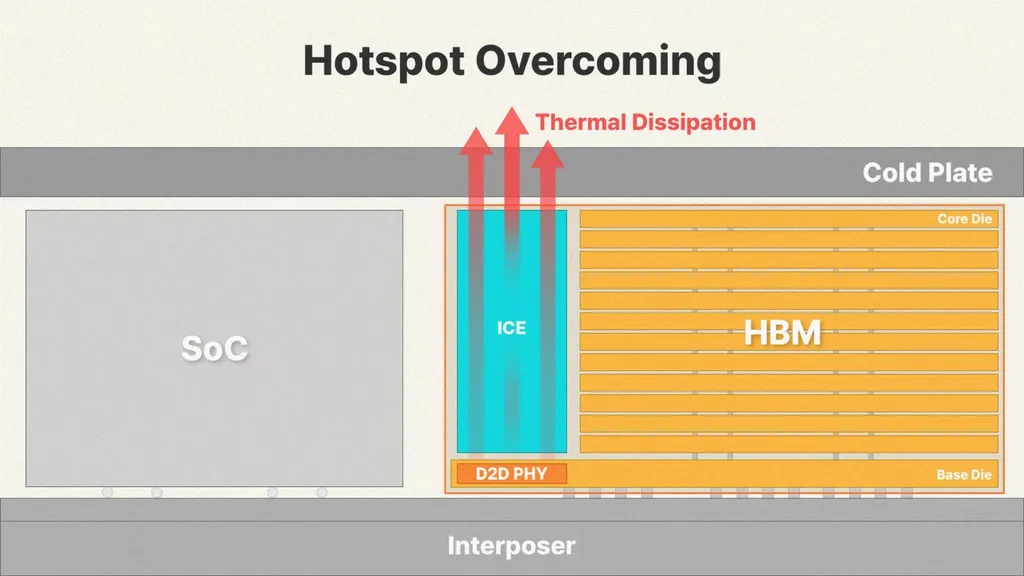
SK hynix has introduced its new iHBM technology, which features integrated cooling elements to reduce heat generation in AI computing environments. This innovation addresses the critical heat management challenges posed by high bandwidth memory as AI workloads increase. The company aims to implement iHBM in its upcoming HBM5 products and beyond, enhancing performance in high-performance computing and AI data centers.
- ▪SK hynix's iHBM technology embeds cooling elements within the HBM package to combat overheating.
- ▪The new design reduces thermal resistance by over 30 percent compared to traditional HBM designs.
- ▪iHBM is compatible with existing system-in-package environments, facilitating easier adoption for customers.
2 outlets in our directory ran this story. All of the coverage we found sits in one bucket: centre. That one-sidedness is itself worth noticing.
Hacker News (AI / LLM) files mainly under ai. We currently carry 3,344 of its stories.
Story provenance
Source · retrieval · rights · ranking — open for full record
inspect →
Story provenance
Attribution is not the same as permission. This drawer separates discovery metadata, excerpts, WeSearch-generated summaries, reuse status, and whether the publisher receives the visit. Nothing here claims a legal grant the publisher has not made.
Record
| Original publisher | Co |
| Canonical URL | https://www.koreatimes.co.kr/business/companies/20260526/sk-hynix-unveils-self-cooling-ihbm-chips-to-combat-ai-overheating |
| Publication time | Tue, 26 May 2026 22:26:24 +0000 |
| Retrieval time | 2026-05-26T22:32:54.705Z |
| Last seen | 2026-05-26T22:32:54.705Z |
| Headline source | Publisher (no WeSearch rewrite) |
| Excerpt source | publisher body |
| Excerpt method | First ~120 words (~800 chars) of extracted publisher body, fair-use limited. |
| Summary | WeSearch · cerebras-chat (WeSearch summarizer) |
| Summary source text | contentText |
| Citation coverage | Summary is a WeSearch-generated derivative; primary citation is the original publisher URL. |
| Cluster | LsggoC_WYRqE · 2 stories |
| Cluster logic | Grouped by semantic title/content similarity across sources within a rolling window. Same-publisher template collisions are excluded from coverage comparison. |
| Ranking reason | Story pages are not engagement-ranked. Hub feeds use recency, with optional source-diversified chronological ordering (cap consecutive stories per source). No personalized ranking. |
| Publisher visit | Yes — open original |
| Substitutes article? | No — link-out required for full text |
Rights status (four layers)
WeSearch handling by dimension
| Indexing | May the item be indexed (stored, ranked, made findable)? | Allowed |
| Snippet | May a short excerpt of the publisher's text be shown? | Allowed |
| AI summary | May WeSearch generate its own short summary of the article? | Limited |
| Retrieval / RAG | May the content be exposed for third-party retrieval-augmented generation? | Not asserted |
| Model training | May the content be used to train AI models? | Not asserted |
| Commercial reuse | May the content be reused commercially? | Not permitted |
Basis: Derived from the published RSS/Atom feed. Contact: [email protected]. Reviewed: 2026-07-24.
Opening excerpt (first ~120 words) tap to expand
An explanatory image of SK hynix's new iHBM technology / Courtesy of SK hynixSK hynix on Tuesday revealed its new high bandwidth memory technology iHBM, which embeds a proprietary cooling element inside the HBM package to substantially reduce heat generation in artificial intelligence (AI) computing environments.The company said heat management has become a critical bottleneck as HBM stacks more layers and operates at higher speeds to keep pace with surging AI workload demand. Heat concentration is most acute at the die-to-die physical layer (D2D PHY), the high-speed data interface between the HBM base die and AI processor dies.
…
Excerpt limited to ~120 words for fair-use compliance. The full article is at Co.
Discussion
0 commentsMore from Co
.jpg&w=320)