Villains Are Just More Interesting Than Heroes (and More F*ckable, If We’re Being Frank)
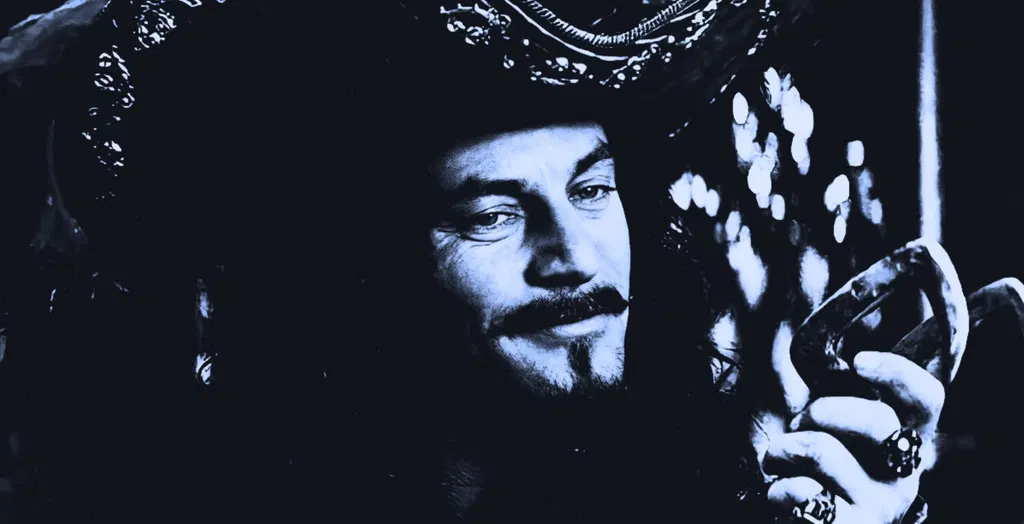
The article explores the fascination with villains in storytelling, particularly highlighting characters like Captain Hook from Peter Pan. It argues that villains often possess more narrative freedom and complexity than heroes, making them more interesting. The author reflects on their personal connection to these characters and the broader appeal of villainy in fiction.
- ▪The author became obsessed with Captain Hook at a young age after seeing the Disney version of Peter Pan.
- ▪Villains are often more interesting than heroes because they have the freedom to act without moral constraints.
- ▪The article discusses how villains can express their flaws and traumas openly, which can be comforting to audiences.
Literary Hub (LitHub) files mainly under books. We currently carry 79 of its stories.
Story provenance
Source · retrieval · rights · ranking — open for full record
inspect →
Story provenance
Attribution is not the same as permission. This drawer separates discovery metadata, excerpts, WeSearch-generated summaries, reuse status, and whether the publisher receives the visit. Nothing here claims a legal grant the publisher has not made.
Record
| Original publisher | Literary Hub |
| Canonical URL | https://lithub.com/villains-are-just-more-interesting-than-heroes-and-more-fckable-if-were-being-frank/ |
| Publication time | Fri, 22 May 2026 08:59:40 +0000 |
| Retrieval time | 2026-05-22T09:02:01.206Z |
| Last seen | 2026-05-22T09:02:01.206Z |
| Headline source | Publisher (no WeSearch rewrite) |
| Excerpt source | publisher body |
| Excerpt method | First ~120 words (~800 chars) of extracted publisher body, fair-use limited. |
| Summary | WeSearch · cerebras-chat (WeSearch summarizer) |
| Summary source text | contentText |
| Citation coverage | Summary is a WeSearch-generated derivative; primary citation is the original publisher URL. |
| Cluster | 5CauapNdhv71 |
| Cluster logic | Grouped by semantic title/content similarity across sources within a rolling window. Same-publisher template collisions are excluded from coverage comparison. |
| Ranking reason | Story pages are not engagement-ranked. Hub feeds use recency, with optional source-diversified chronological ordering (cap consecutive stories per source). No personalized ranking. |
| Publisher visit | Yes — open original |
| Substitutes article? | No — link-out required for full text |
Rights status (four layers)
WeSearch handling by dimension
| Indexing | May the item be indexed (stored, ranked, made findable)? | Allowed |
| Snippet | May a short excerpt of the publisher's text be shown? | Allowed |
| AI summary | May WeSearch generate its own short summary of the article? | Limited |
| Retrieval / RAG | May the content be exposed for third-party retrieval-augmented generation? | Not asserted |
| Model training | May the content be used to train AI models? | Not asserted |
| Commercial reuse | May the content be reused commercially? | Not permitted |
Basis: Derived from the published RSS/Atom feed. Contact: [email protected]. Reviewed: 2026-07-24.
Opening excerpt (first ~120 words) tap to expand
The first character I ever became obsessed with was Captain Hook.Article continues after advertisement I couldn’t have been more than three or four, though I was already weird; I saw the 1953 Disney version of Peter Pan and immediately fell in love in only the way that tiny children can. I read the cardboard-backed children’s book story over and over, until the binding disintegrated. The copy I had was the adaptation by mystery writer Mary V. Carey, titled Peter Pan and Captain Hook. For most of my early childhood I believed this was the true and proper name of the story, which the film had truncated for simplicity’s sake. This made perfect sense to me, since Captain Hook, as the primary villain, deserved equal billing, and was at least as important as the protagonist.
…
Excerpt limited to ~120 words for fair-use compliance. The full article is at Literary Hub.
Discussion
0 commentsMore from Literary Hub