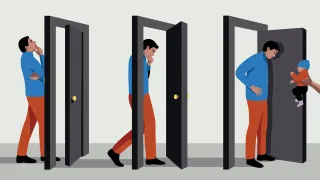
Weike Wang on Recurring Dreams and Loneliness

Weike Wang discusses her story "The Dreamdrive," inspired by her own struggles with insomnia and a nightmare her husband experienced about reckless driving. The story follows a man who suffers from relentless dreams of driving, symbolizing his inability to rest and deeper psychological themes. Wang reflects on the personal significance of dreams, the limits of others' empathy, and the narrative appeal of Freudian theory over scientific explanations.
- ▪Weike Wang's insomnia and her husband's nightmare about driving inspired the story "The Dreamdrive."
- ▪The protagonist dreams every night of driving, reflecting his sleeplessness and emotional turmoil.
- ▪Wang prefers Freudian interpretations of dreams in fiction because they allow for open-ended, emotionally rich storytelling.
- ▪The protagonist's immigrant background and childhood experiences are tied to his recurring dream about driving.
- ▪People often lose interest in others' dreams, as they are more invested in their own meaning-making processes.
The New Yorker files mainly under culture. We currently carry 75 of its stories.
Story provenance
Source · retrieval · rights · ranking — open for full record
inspect →
Story provenance
Attribution is not the same as permission. This drawer separates discovery metadata, excerpts, WeSearch-generated summaries, reuse status, and whether the publisher receives the visit. Nothing here claims a legal grant the publisher has not made.
Record
| Original publisher | The New Yorker |
| Canonical URL | https://www.newyorker.com/books/this-week-in-fiction/weike-wang-05-25-26 |
| Publication time | Sun, 17 May 2026 10:00:00 +0000 |
| Retrieval time | 2026-05-17T10:22:13.044Z |
| Last seen | 2026-05-17T10:22:13.044Z |
| Headline source | Publisher (no WeSearch rewrite) |
| Excerpt source | publisher body |
| Excerpt method | First ~120 words (~800 chars) of extracted publisher body, fair-use limited. |
| Summary | WeSearch · cerebras-chat (WeSearch summarizer) |
| Summary source text | contentText |
| Citation coverage | Summary is a WeSearch-generated derivative; primary citation is the original publisher URL. |
| Cluster | g8XQy-e2Vb1L |
| Cluster logic | Grouped by semantic title/content similarity across sources within a rolling window. Same-publisher template collisions are excluded from coverage comparison. |
| Ranking reason | Story pages are not engagement-ranked. Hub feeds use recency, with optional source-diversified chronological ordering (cap consecutive stories per source). No personalized ranking. |
| Publisher visit | Yes — open original |
| Substitutes article? | No — link-out required for full text |
Rights status (four layers)
WeSearch handling by dimension
| Indexing | May the item be indexed (stored, ranked, made findable)? | Allowed |
| Snippet | May a short excerpt of the publisher's text be shown? | Allowed |
| AI summary | May WeSearch generate its own short summary of the article? | Limited |
| Retrieval / RAG | May the content be exposed for third-party retrieval-augmented generation? | Not asserted |
| Model training | May the content be used to train AI models? | Not asserted |
| Commercial reuse | May the content be reused commercially? | Not permitted |
Basis: Derived from the published RSS/Atom feed. Contact: [email protected]. Reviewed: 2026-07-24.
Opening excerpt (first ~120 words) tap to expand
This Week in FictionWeike Wang on Recurring Dreams and LonelinessThe author discusses her story “The Dreamdrive.”By Deborah TreismanMay 17, 2026Illustration by The New Yorker; Source photograph by Weike WangSave this storySave this storySave this storySave this storyThis interview was featured in the Books & Fiction newsletter, which delivers the stories behind the stories, along with our latest fiction. Sign up to receive it in your inbox.The protagonist of your story “The Dreamdrive” is a man who, every night, dreams that he’s driving a car and wakes up feeling as though he hasn’t slept at all. How did this idea come to you?I have insomnia, and last year it was at an all-time high. When I can’t sleep, I am a prisoner of my brain and body and spirit.
…
Excerpt limited to ~120 words for fair-use compliance. The full article is at The New Yorker.
Discussion
0 commentsMore from The New Yorker